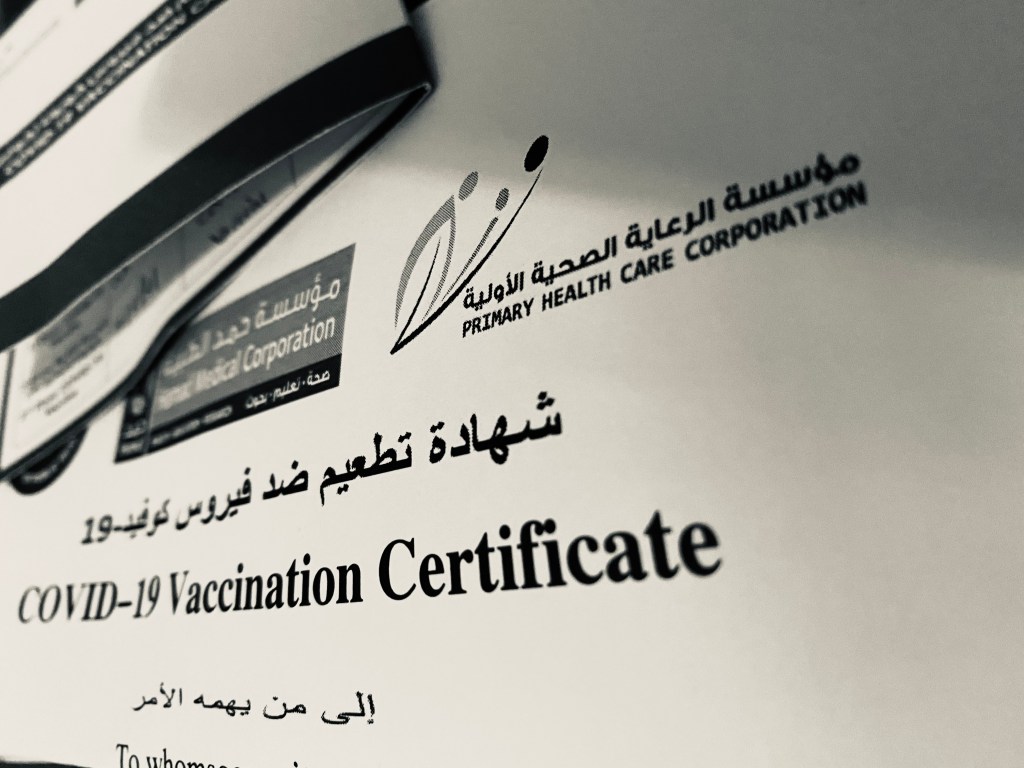
The world is facing the worst global health crisis in generations. More than 163 million people have lost their lives to COVID-19, worldwide. The need of the hour is to put an end to this global pandemic & the only & effective way to do that (other than social isolation) is – Vaccination. COVID-19 vaccines from Pfizer-BioNTech & Moderna (approved by FDA & EUA in the US) are presently authorized for emergency use by the Qatar Health Ministry in the State of Qatar. The tables turned when Qatar received its first batch of Pfizer-BioNTech back in December 2020 followed by Moderna in February 2021, paving the way for inoculations to begin.
WHAT ARE mRNA VACCINES?
Pfizer-BioNTech & Moderna are categorized as mRNA vaccines. It is a novel technique in which a messenger RNA is administered in the body, unlike other vaccines that put a weakened or inactivated germ into the body to trigger an immune response. Messenger RNA teaches/instructs our cells how to make a protein or a piece of protein that prompts an immune response that produces antibodies. Once the mRNA triggers the immune response, it breaks down.
Pfizer-BioNTech & Moderna Vaccines use mRNA from the genetic code of COVID-19’s spike protein. After teaching our body to make protective antibody proteins to protect us against COVID-19, mRNA then degrades summarily. You can learn more about it here.
It will take around 14 days after the second dose of the vaccine for our immune system to build high levels of immunity.
COMMON SIDE EFFECTS
As common after many immunizations, it is normal to experience some pain, swelling, or redness at the injection site. A normal immune response can lead to low-grade fever, fatigue, headache, and muscle aches that will subside within 24-48 hours.
Every ‘body’ is different & behaves differently after vaccination, it is very likely that one encounters mild to literally ‘NO’ side effects at all.
OUR JAB STORY – UNCOVERED
MILD v/s HARSH
On getting my appointment, I strode into the PHCC vaccination center & got my jab of the Pfizer-BioNTech vaccine. I was looking forward to it since its arrival in Qatar, so a bit of excitement was comprehensible. Took me 30 minutes – in & out. My better half who received his first jab of Moderna vaccine a month or so before I, came down displaying some rough side effects both the times, so foreseeing them for myself was again intelligible.
First Dose – I & Pfizer-BioNTech: After 4 hours of inoculation, my arm started to feel sore. I could lift it to 60° without pain, which gradually went down to 45° in the hours that followed. It wasn’t something excruciating but was movement constructed. I restricted the movement of that arm as much as I could as to not alleviate the pain. Took paracetamol 6 hours after the time of inoculation and went to bed. That night I couldn’t sleep on my right side, despite the medication taken. I woke up with the arm soreness intact. Didn’t repeat paracetamol as I could deal without it. By the evening it started to fade away and eventually left my arm by the night. The night went by placidly. 24 hours & I was back to my pre-vaccination self, physically.
First Dose – Him & Moderna: Contrary to what I experienced, my husband encountered multiple side effects. He complained of nausea, bloating, fatigue, body ache, & soreness of the arm, but thankfully no fever. His symptoms subsided within 3 days. Paracetamol was taken twice – the first dose 8 hours after inoculation & the second repeated 8 hours after the first.
Second Dose – I & Pfizer-BioNTech: 21 days later I got my second jab. Having had my husband’s rough experience from his second, I was less thrilled & more apprehensive. Surprisingly, nothing showed up that harsh. Mild arm soreness developed after 3 hours. Took paracetamol before sleeping (6 hours after the inoculation). The soreness wasn’t like it was the first time, I could sleep on my right side. Woke up a bit feverish & achy. Mild arm soreness still clung. I repeated taking paracetamol every 8 hours (3 doses taken, altogether). The fever stayed between 37.2° – 37.7° C (99° – 100° F) for 24 hours. I woke up with little to no symptoms the second morning. Took me 36 hours to make a successful comeback.
Second Dose – Him & Moderna: 28 days after his first, he went for his second jab. His second wasn’t a pleasant experience. After 14 hours of inoculation, he came down with a high-grade fever of 38.8°C (102°F) that came down to 38.6°– 38.3°C (101.5° – 101°F) with the paracetamol. It was accompanied by chills, fatigue, body ache, leg cramps, nausea, & loss of appetite. The fiver broke after 48 hours with the last dose of paracetamol but recurred after the medication wore off to 37.7° – 37.2°C (100° – 99°F). On the fourth morning, his body’s thermostat got back to normal. On the fifth day, he recuperated.
We contacted the helpline (out of concern after encountering these side effects after his second dose) but were calmed down by them saying that it is all normal and will subside within 24 – 48 hours. In case it persists for more than 3 days, we’ll be called in for a swab test.
SOME TIPS TO MAKE YOUR VACCINATION A BETTER EXPERIENCE
Run Your Eye Over The Kind Of Vaccine You’re Receiving: It is always a good idea to read up about the vaccine you would be offered. CDC is a good place to get facts.
Arrive Well-Rested: The night before the appointment, make sure to get a good night’s sleep. Rest helps your immune system to work to its full potential & aids in prompt recovery.
Prioritize Rest & Sleep Afterward: After getting your jab, stay well-rested & get sufficient slumber. Good sleep helps your body to devote more resources to strengthen your body’s immunological functions. So, ensure you get a good sleep around the time of vaccination as it can provide you with even more protection.
Eat Light Beforehand & Afterward: Don’t go hungry or thirsty. Take a light meal before going & keep it light too afterward for some time.
Communicate Your Health Condition: Talk to your health care provider about your medical conditions, if you have any, such as pregnancy, allergies, medications you’re currently taking, or a compromised immune system. It’s better communicating your health status with the medical provider.
Stay Hydrated: Water is a ‘magic bullet’ but when taken in the right amount. Stay hydrated within the optimum range as dehydration could suppress the immune system & overhydration can pose a health risk.
Get Yourself Sorted for The Next 3 Days: Some people’s immune system responds differently, like my husband’s did, so you should get yourself sorted out for the next 3 days. It will help you to have more time to rest and relax when you don’t have to run for uncalled errands & undone home chores.
Monitor Your Side Effects: This is very crucial to one’s health & safety. Monitor all your side effects/symptoms and call the helpline provided if you think something is not right. The symptoms usually ward off within 24 – 48 hours, if they persist even after 3 days, contact your healthcare provider.
Continue To Follow CDC Guidelines To Minimize Transmission: Even with the immunization, you are supposed to wear face masks in public, practice social distancing, and mind hand hygiene. We haven’t received ‘herd immunity’ yet, so chances of infection still exist. Vaccinated people can still get infected, it’s just less probable that they will get severely sick. Apart, you can be a carrier too.
CONCLUSION
Getting immunized is imperative to protect
you, your family, & the community. Every ‘body’ is different and behaves differently after immunization. Unless you don’t have a history of severe allergic reaction to any ingredient in the vaccine, don’t miss it! Once we will achieve ‘herd immunity’ with most people getting immunized/vaccinated, the resurgence in ‘The Pre-Pandemic Normal’ will be witnessed & I believe no one can wait for that, isn’t it? So, feel free to roll up your sleeves for your jab. Until then mask up, socially isolate & mind your hand hygiene. Be the barrier!

Disclaimer:
No content on this blog should ever be used as a substitute for direct medical advice from your doctor or other qualified health professional.
~ QuratulAin Hamza
 QuratulAin Hamza